
7 Executive Presence Skills Every Leader Needs in 2026
Table of Contents
7 Executive Presence Skills Every Leader Needs in 2026
You walk into a high-stakes quarterly review. The CEO is watching. Three peers are gunning for the same promotion. The decision is made in the first 90 seconds — and it has very little to do with your slides it has everything to do with executive presence skills.
That invisible signal you send is exactly why executive presence skills have become the single biggest career multiplier in 2026. Technical depth gets you a seat at the table. Presence decides whether you keep it.
And here’s the uncomfortable truth most professionals discover too late: nobody puts “lacks presence” in your appraisal. They just stop inviting you to the rooms where careers are actually made.
What is Executive Presence?
The simplest executive presence meaning is this: it’s the gut-level confidence others feel that you are the person to bet on when things get hard.
So what is executive presence in real corporate terms? It’s the blend of how you communicate, how you carry yourself under pressure, and how you make others feel sharper and safer in the room — even when you’re not speaking.
It is not about a deep voice, a power suit, or pedigree from a Tier-1 college. It’s a learnable set of behaviours that signal three things to senior leaders:
- You can be trusted with bigger decisions.
- You won’t crack when the situation does.
- You make the organisation look good in front of clients, boards, and investors.
And in 2026, those signals are getting more visible, not less.
Why Executive Presence Skills Are Non-Negotiable in 2026
The Indian corporate landscape has shifted faster in the last three years than in the previous decade. Hybrid work, AI in every workflow, GCC expansion, and flatter hierarchies have rewritten the rules of who gets promoted.
Here’s what mid-to-senior leaders are quietly running into right now:
- The “invisible manager” trap — solid output, no visibility, no promotion.
- Global stakeholder fatigue — leading calls across three time zones where you have four minutes to make your point.
- AI eating execution work — your judgement and communication are now the only real differentiators.
- The AVP/VP ceiling — where pure skill stops mattering and presence takes over.
- Lateral hire competition — companies are now poaching presence-led leaders from BFSI, consulting, and tech, and slotting them above internal talent.
Translation: if you can’t be felt in the room, you won’t be picked for the room.
Promotions above manager level are now 70% presence and politics, 30% performance. That’s not cynicism — that’s the math senior HRBPs will quietly confirm off the record.
The 7 Essential Executive Presence Skills Every Leader Needs
These are the seven executive presence skills that actually move the needle in Indian boardrooms, virtual town halls, and CXO one-on-ones in 2026.
1. Strategic Communication & Clarity
Senior leaders don’t have time for your context. They want the headline first.
- Lead with the conclusion. Then the rationale. Then the data.
- Replace “I think we should maybe consider…” with “I recommend X because Y.”
- Cut filler words — basically, actually, just, sort of — they shrink your authority instantly.
- Use the “BLUF” framework — Bottom Line Up Front. It’s how the military, McKinsey, and every effective CXO communicates.
Rule of thumb: if you can’t say it in 60 seconds, you don’t own it yet.
In Indian corporate settings especially, where meetings often spiral into 90-minute monologues, the person who speaks last and crispest is usually the one remembered.
2. Composure Under Pressure (Gravitas)
Gravitas isn’t being serious or stiff. It’s being unshakeable when everyone else is losing it.
- When challenged in a review, pause for two full seconds before responding. It signals control.
- Lower your pace, not your volume.
- Never argue with emotion in the room — name it, address it, and move on.
- Watch your hands. Fidgeting, capping/uncapping pens, and over-gesturing all leak anxiety to the room.
The leader who stays calm when the quarter is on fire is the one who gets handed the next P&L. Boards don’t promote brilliance — they promote steadiness.
3. Decisive Judgment
In 2026, ambiguity is the default setting. Leaders who wait for “complete data” are quietly being replaced by leaders who decide with 70% information.
- Make the call. State your assumptions out loud.
- Commit publicly, course-correct privately.
- Disagree and commit — once a decision is made, stop relitigating it in hallway conversations.
- Build a “reversibility filter” — for one-way doors, take your time. For two-way doors, decide fast and move.
The most senior people in your organisation make 20 small decisions before breakfast. They’ve stopped optimising for being right and started optimising for momentum.
4. Persuasive Storytelling
Numbers inform. Stories move budgets. Every senior leader in your company is already drowning in 40 dashboards — yours has to mean something.
A simple structure that works in every Indian corporate setting:
- The stake — what’s at risk or what’s possible.
- The shift — what changed in the market, the customer, or the data.
- The ask — what you need from them, specifically.
Pair every key metric with a one-line human consequence. “Churn rose 3%” lands flat. “We lost 47 customers last quarter — including the one the CEO personally onboarded” gets the budget approved.
5. Intentional Listening
This is the most undervalued of the seven. Most professionals listen to reply. Leaders listen to understand the unsaid.
- Notice what your CEO doesn’t push back on — that’s where the real priority lives.
- Paraphrase before responding: “So what you’re really worried about is X — is that right?”
- Put the phone face-down. Visibly. People notice.
- In 1:1s with senior leaders, follow the 80/20 rule — let them talk 80% of the time, especially in the first three meetings.
You will learn more about your CEO’s actual strategy from what makes them lean forward than from any all-hands deck.
6. Digital & Virtual Presence
Half your career is now happening on a 1080p tile. Treat that tile like the boardroom it actually is.
- Eye-level camera, lit from the front, clean background. Non-negotiable.
- Speak 10–15% slower on video than you would in person.
- Turn your camera on first in the meeting. It anchors the room around you.
- Master the async written update — a sharp note on Slack or Teams builds presence even when you’re silent.
- Keep your LinkedIn headline and recent posts aligned with where you want to go next, not where you’ve been.
In a hybrid world, your digital footprint is your shadow in the corner office. Treat it accordingly.
7. Authentic Personal Brand
Executive presence is no longer about performing a polished, neutral, beige version of yourself. In 2026, distinctiveness wins.
- Identify the 2–3 things you want to be known for. Repeat them consistently.
- Develop a point of view on your industry — share it on LinkedIn, in town halls, in skip-level meetings.
- Stop apologising for your accent, your background, or your path. Own it — it’s your edge, not your handicap.
- Pick a signature — a phrase, a framework, a question you always ask. People remember texture, not titles.
The leaders winning today aren’t the most polished. They’re the most unmistakable.
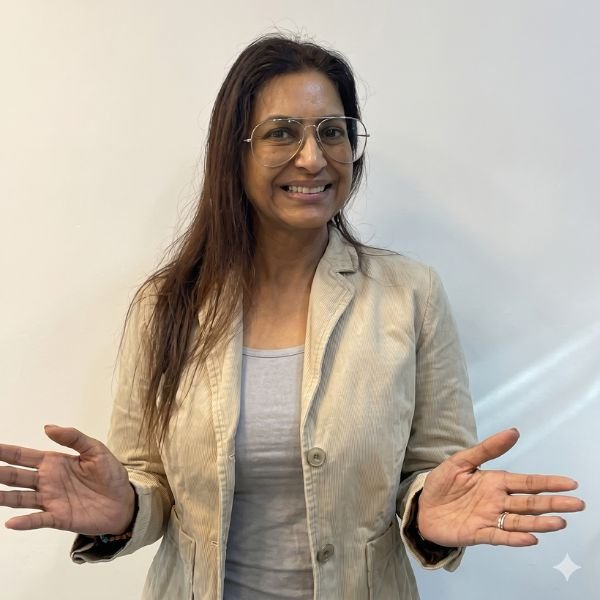
Why Ritu Rathod is Mumbai's Most Trusted Name for Communication & Personality Development
Knowing the seven skills is one thing. Building them under expert guidance is what actually moves you from “good professional” to “unmistakable leader.”
And in Mumbai, one name is quietly behind the transformation of thousands of confident communicators — Ritu Rathod.
A TEDx Speaker. A Published Author. A Coach to 10,000+.
Ritu isn’t a theorist. She’s a TEDx Speaker, author, and communication coach whose work has been featured in Mid-Day, Financial Express, India Today, Tribune India, and Education World.
The numbers speak for themselves:
- 10,000+ learners trained across academic and professional tracks
- 4.9 / 5.0 average course rating — consistently
- 2.5L+ engaged followers on her verified Instagram, @moonlight._.musings
- Featured author whose book is shaping how families and professionals think about communication
What She Actually Helps You Build
Ritu’s signature programme under her brand Moonlight is built on the exact foundations of executive presence:
- Soft Skills Development — the everyday behaviours that make leaders felt in a room
- Conversation Skills — turning small talk into strategic influence
- Elocution & Voice Coaching — pace, tone, and clarity that command attention
- English Language Mastery — precise, articulate, boardroom-ready expression
- Debate & Persuasion — structured thinking under live pressure
Whether you’re a senior professional preparing for a global CXO panel, an entrepreneur pitching investors, or a parent wanting to gift your child a lifelong edge — Ritu’s coaching meets you exactly where you are.
Why Professionals Choose Ritu Over a Generic Coach
- She is the rare coach who has both walked the TEDx stage and trained at scale — not just theory, lived expertise.
- One-on-one and small-group formats — your transformation never gets diluted in a 50-person classroom.
- Mumbai-based, globally relevant — her students crack SAT, IELTS, TOEFL, board interviews, and global corporate roles.
- Authentic, no-jargon approach — Ritu strips communication coaching of its intimidation and makes it feel like a conversation with a sharp, supportive friend.
Her students don’t just speak better. They get promoted, get into dream schools, and get listened to.
Ready to Become the Most Composed Voice in Every Room?
If you’ve read this far, you already know the cost of not working on your presence — another year of being talented but invisible.
Stop waiting to be noticed. Start training to be unmistakable.
Explore Ritu’s coaching, speaking, and book at riturathod.com — and discover why over 10,000 learners trust her with their voice, their confidence, and their career.Because in 2026, the leaders who get picked aren’t the loudest in the room.They’re the ones trained to be heard.